UK
UK Canada
 Colombia
 India
India Jamaica
 Philippines
 US
US SA
SAGreat customer service is not just knowing the right answers. It is also about how those answers are delivered, and this is where emotional intelligence in customer service becomes essential. Professionals who understand and manage emotions, both their own and their customers', tend to handle difficult conversations more calmly and build stronger, more trusting relationships. In an industry where every interaction shapes how a brand is perceived, this ability to read and respond to emotion can be just as important as product knowledge.
This blog explains what emotional intelligence is, why it matters so much in customer-facing roles, and how emotional intelligence and customer service directly shape the quality of every interaction.
What is Emotional Intelligence?
Emotional intelligence, often shortened to EQ, refers to the ability to recognise, understand, and manage your own emotions, while also being attuned to the emotions of others. Unlike technical knowledge, which can be taught through training manuals, emotional intelligence develops through self-awareness and practice. It is not a fixed trait, but a skill that can grow steadily with experience and honest reflection.
In a professional setting, customer service and emotional intelligence are closely linked. Agents with strong EQ are better equipped to stay calm under pressure, read a customer's tone accurately, and respond in a way that de-escalates rather than worsens a situation. This makes EQ one of the most valuable, if often overlooked, skills in the industry, particularly in roles where every conversation carries the potential to either strengthen or damage a customer relationship. Recruiters and team leaders increasingly look for signs of EQ alongside technical ability when building support teams.
Why Emotional Intelligence Matters in Customer Service
Customer service roles involve constant emotional exposure, from frustrated complaints to confused queries and, occasionally, genuine appreciation. Without strong emotional regulation, this can quickly lead to stress and burnout, particularly for professionals handling high volumes of interactions each day.
Emotional intelligence for customer service professionals helps manage this emotional load sustainably. It allows agents to separate a customer's frustration from personal criticism, respond thoughtfully rather than reactively, and maintain professionalism even in tense situations.
Over time, this contributes directly to emotional intelligence and customer satisfaction, as customers consistently respond better to agents who remain calm, understanding, and genuinely engaged. Teams with higher average EQ also tend to report lower turnover, since managing emotional demands well makes the role feel less draining over time. This, in turn, supports more consistent service quality across the wider team.
The Five Components of Emotional Intelligence
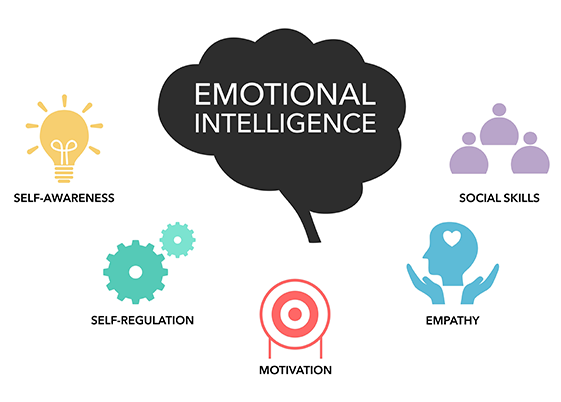
Emotional intelligence is typically broken down into five core components, each of which plays a distinct role in customer service performance. Understanding these components individually makes it easier to identify specific areas for growth.
Self-Awareness
Self-awareness is the ability to recognise your own emotions and understand how they influence your behaviour. In customer service, this means noticing when you are becoming frustrated or overwhelmed before it affects how you speak to a customer. Agents who practise self-awareness are often quicker to catch themselves before a conversation takes a negative turn.
Self-Regulation
Self-regulation is the ability to manage those emotions once you notice them. Rather than reacting impulsively to a difficult customer, self-regulation allows an agent to pause, stay composed, and choose a professional response. This is particularly important during escalated calls, where a single reactive comment can quickly damage trust.
Motivation
Internally motivated professionals are driven by a genuine desire to help, not just by targets or incentives. This intrinsic motivation often shows up as persistence, patience, and a willingness to go the extra mile for a customer, even when a solution is not straightforward.
Empathy
Empathy in customer service means genuinely understanding a customer's frustration or concern, rather than simply acknowledging it as a formality. Empathetic agents listen carefully and respond in a way that shows the customer they are truly being heard, which often diffuses tension far more effectively than a quick fix.
Social Skills
Strong social skills allow agents to build rapport quickly, communicate clearly, and adapt their tone to suit different customers. These customer interaction skills are essential for creating positive, memorable experiences, and they often make the difference between a customer who feels dismissed and one who feels genuinely cared for.

Benefits of Emotional Intelligence in Customer Service
The benefits of being emotionally intelligent for both individuals and organisations extend well beyond a single customer conversation. Some of the most notable benefits of emotional intelligence in the workplace include:
- Improved customer satisfaction: Calmer, more empathetic interactions lead to better outcomes
- Reduced agent burnout: Better emotional regulation helps manage stress over time
- Stronger team relationships: Colleagues with high EQ communicate and collaborate more effectively
- Better conflict resolution: Emotionally intelligent agents de-escalate tense situations more successfully
- Higher customer loyalty: Customers are more likely to return when they feel genuinely understood
These advantages of emotional intelligence extend well beyond individual interactions, often shaping overall team culture and performance. Organisations that actively invest in developing EQ across their teams frequently see this reflected in stronger customer feedback scores and healthier workplace morale, along with more collaborative, supportive teams overall.
How Emotional Intelligence Improves Customer Interactions
Emotional intelligence directly shapes the tone and outcome of customer conversations. Agents with high EQ are more likely to listen actively rather than simply waiting for their turn to respond, which helps them identify the real issue behind a complaint, even when it is not stated outright.
They are also better at adjusting their communication style based on a customer's emotional state, whether that means slowing down for a confused customer or staying calm with an upset one. Understanding what is customer satisfaction in a deeper sense (not just resolving an issue, but making the customer feel valued) is central to how emotional intelligence improves service quality. This deeper understanding often turns a routine resolution into an experience the customer remembers positively, which can influence whether they return or recommend the brand to others.

Signs of High Emotional Intelligence in Customer Service Professionals
Certain behaviours consistently signal strong emotional intelligence in a customer service setting, and they are often noticeable even in day-to-day interactions:
- Staying calm and composed during difficult conversations
- Listening fully before responding, rather than interrupting
- Acknowledging a customer's feelings before jumping to a solution
- Adapting tone and language to match the customer's mood
- Taking accountability for mistakes without becoming defensive
Professionals who consistently show these behaviours often stand out early in their careers, particularly those just starting in a customer representative job, as these habits tend to translate into stronger performance reviews and faster progression.
Common Mistakes That Show Low Emotional Intelligence
On the other hand, certain patterns often indicate low emotional intelligence and can quietly damage customer relationships over time:
- Responding defensively to criticism or complaints
- Rushing through conversations without addressing the customer's actual concern
- Taking customer frustration personally
- Using a flat or scripted tone regardless of the situation
- Struggling to stay calm under pressure
Recognising these patterns is often the first step toward improvement. Many professionals address them as part of a broader professional development plan, working alongside a manager or mentor to build stronger habits over time.
Conclusion
Emotional intelligence and customer service are no longer optional skills. These are core capabilities that shape customer satisfaction, team performance, and long-term career growth. From self-awareness to empathy, each component plays a role in creating calmer, more effective interactions, and developing them takes ongoing practice rather than a single training session. For customer service professionals and team leaders across the UK, building stronger EQ is one of the most valuable investments in both individual and organisational success. At HGS UK, we recognise the importance of emotional intelligence in delivering genuinely excellent customer experiences, and we continue to support our teams in developing these essential skills throughout their careers.
FAQs
-
Can emotional intelligence be learned or improved?
Yes, emotional intelligence can be developed over time through self-reflection, feedback, and deliberate practice, particularly in areas like self-regulation and empathy. Many professionals see marked improvement within months of consistent effort.
-
What is the difference between emotional intelligence and customer service skills?
Customer service skills involve specific processes and product knowledge, while emotional intelligence shapes how those skills are applied, especially during emotionally charged interactions where tone and timing matter as much as accuracy.
-
How can managers assess emotional intelligence during customer service interviews?
Managers often use behavioural questions, role-play scenarios, and situational judgement tests to observe how candidates handle stress, empathy, and difficult conversations, rather than relying on self-reported traits alone.
-
Is emotional intelligence more important than technical skills in customer service?
Both matter, but emotional intelligence often determines how effectively technical knowledge is delivered, especially in emotionally sensitive or high-pressure customer situations where tone can shape the entire outcome.