SA
SA Canada
 Colombia
 India
India Jamaica
 Philippines
 UK
UK US
USCareer planning is one of the most important steps in building a successful and fulfilling professional life. Whether you are a student, a fresh graduate, or an early-career professional, understanding how to set short-term and long-term goals can help you move forward with clarity and purpose.
In today’s fast-changing job market, having a clear direction is no longer optional—it is essential. This guide explains everything you need to know about short-term vs long-term goals, including examples, benefits, and practical strategies to achieve them.

What Are Career Goals?
Career goals are the objectives you set for your professional life. They define where you want to go and how you plan to get there. These goals can be immediate, such as learning a new skill, or long-term, such as becoming a senior manager or starting your own business.
Types of Career Goals
There are several types of professional goals, including:
- Skill-based goals (learning new tools or technologies)
- Position-based goals (getting promoted)
- Financial goals (earning a higher salary)
- Personal development goals (improving communication or leadership)
- Industry-specific goals (switching careers or specialising)
Understanding these categories helps you create a balanced set of short and long-term goals, often referred to as long short-term goals in career planning discussions.
How Career Goals Shape Your Professional Growth
Career goals act like a roadmap. Without them, you may feel lost or stuck. When you define clear goals:
- You stay motivated and focused
- You make better career decisions
- You track your progress effectively
- You build confidence over time
For example, if you're exploring how to choose a career, setting clear goals can guide your decisions and help you avoid confusion.

What Are Short-Term Career Goals?
Short-term career goals are objectives you aim to achieve in the near future—usually within a few months to one or two years. These goals are smaller, more immediate steps that contribute to your bigger ambitions.
Benefits of Short-Term Goals
The benefits of short-term goals include:
- Quick wins that boost confidence
- Improved focus and productivity
- Better time management
- Clear direction for daily tasks
- Motivation to stay consistent
Short-term goals are especially useful when you are just starting out or exploring opportunities like customer care jobs or entry-level roles.
Examples of Short-Term Goals
Here are some practical short-term and long-term goals examples focused on the short-term:
- Completing an online certification course
- Improving communication skills
- Updating your CV using effective job search tips
- Applying for internships or entry-level jobs
- Learning a new software tool
- Networking with professionals in your field
- Gaining experience in customer experience careers
These examples of career goals show how small actions can lead to big results.

How to Set Effective Short-Term Goals
Setting effective short-term goals requires planning and clarity. Below are proven goal-setting strategies you can follow.
Define Clear and Specific Goals
Avoid vague goals like “I want to improve.” Instead, be specific:
- “I want to complete a digital marketing course in 3 months.”
Clarity makes your goals easier to achieve.
Set Measurable Outcomes
You should be able to measure your progress. For example:
- Number of job applications sent
- Skills learned
- Certifications completed
This ensures accountability.
Keep Goals Realistic and Achievable
Set goals that match your current situation. Unrealistic goals can lead to frustration.
Assign a Clear Deadline
Deadlines create urgency. Without them, goals can be delayed indefinitely.
Break Goals into Actionable Steps
Divide your goal into smaller tasks:
- Research courses
- Enrol in a programme
- Complete weekly modules
This makes the process manageable.
Track Progress Regularly
Tracking helps you stay on course. Use tools like journals, apps, or spreadsheets to monitor your progress.
What Are Long-Term Career Goals?
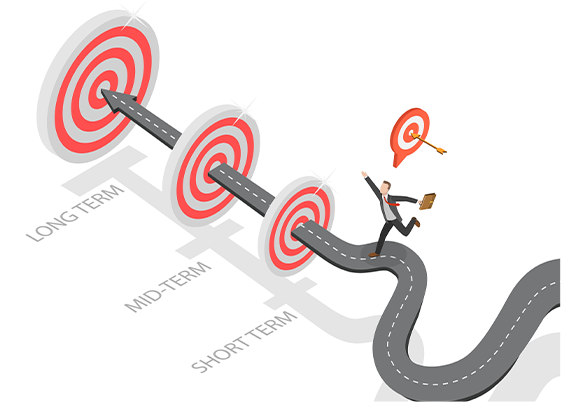
Long-term career goals are objectives you aim to achieve over a longer period—typically 3 to 10 years or more. These goals define your ultimate career direction.
Benefits of Long-Term Goals
The benefits of long-term goals include:
- Clear vision for your future
- Better decision-making
- Increased motivation
- Stronger career identity
- Alignment with personal values
Long-term goals are essential when aiming for leadership roles or exploring high-paying jobs in South Africa.
Examples of Long-Term Goals
Here are some examples of long-term & short-term goals focused on long-term:
- Becoming a team leader or manager
- Starting your own business
- Achieving financial independence
- Specialising in a niche field
- Moving into international roles
- Building a strong professional development plan
These examples of career goals help you visualise your future.

How to Set Effective Long-Term Goals
Setting effective long-term goals requires a clear vision, careful planning, and strategic thinking to ensure your career direction remains focused, achievable, and aligned with your personal and professional aspirations.
Define a Clear Long-Term Vision
Ask yourself:
- Where do I see myself in 5 or 10 years?
- What kind of work excites me?
Your answers will guide your long-term career objectives.
Align Goals with Your Career or Life Purpose
Your goals should reflect your interests, values, and strengths.
Set Realistic and Achievable Targets
Even long-term goals should be realistic. Break them into achievable stages.
Break Goals into Milestones
Divide your long-term goals into smaller milestones:
- Year 1: Gain experience
- Year 3: Get promoted
- Year 5: Move into leadership
This makes large goals less overwhelming.
Create a Flexible Action Plan
Life changes, and so should your plan. Stay adaptable.
Review and Adjust Regularly
Revisit your goals every few months to ensure they still align with your priorities.

Key Differences Between Short-Term and Long-Term Goals
Understanding the difference between long-term and short-term goals is crucial for effective career planning and sustained professional growth.
| Aspect | Short-Term Goals | Long-Term Goals |
|---|---|---|
| Timeframe | Typically achieved within a few weeks to up to 2 years, focusing on immediate actions and quick results | Usually span 3–10 years or more, requiring sustained effort and long-term commitment |
| Purpose | Help achieve immediate progress, build momentum, and develop skills step by step | Provide a clear future vision and direction for overall career growth and success |
| Complexity | Simple, specific, and clearly defined, making them easier to plan and accomplish | Broader, more strategic, and often involve multiple stages or milestones |
| Flexibility | Highly flexible and can be adjusted frequently based on changing needs or circumstances | Less flexible, but can still be reviewed and adjusted over time as goals evolve |
| Examples | Learning a new skill, completing a course, or improving daily productivity | Becoming a manager, starting a business, or achieving long-term financial stability |
Both types are equally important. Short-term goals act as stepping stones that build momentum, helping you stay motivated while gradually working towards your long-term career aspirations.
Common Mistakes to Avoid When Setting Goals
Even with the best intentions, many individuals make common mistakes when setting goals, which can lead to confusion, lack of progress, and difficulty in achieving desired career outcomes over time.
Setting Unrealistic or Vague Goals
Goals like “I want to be successful” lack clarity. Always define specific objectives.
Lack of a Clear Action Plan
Without a plan, goals remain ideas. Break them into steps.
Ignoring Skill Gaps
If you lack certain skills, focus on learning them. For example, improving skills needed for customer experience careers can open new opportunities.
Not Tracking Progress
Without tracking, you won’t know if you’re improving.
Fear of Failure and Lack of Consistency
Fear can stop you from trying. Consistency is key to achieving both short-term career objectives and long-term career objectives.
Conclusion
Understanding and applying short-term vs long-term goals is essential for career success. Short-term goals help you take immediate action, while long-term goals give you direction and purpose. Together, they create a balanced and effective career plan.
If you are planning your career in regions like South Africa, aligning your goals with industry demands can open doors to exciting opportunities. Organisations like HGS South Africa provide platforms where individuals can grow through structured career paths and skill development.
Start today by defining your goals, creating a plan, and taking consistent action. Your future self will thank you.
FAQs
-
Why is goal-setting important for career success?
Goal-setting provides direction, improves focus, and helps you measure progress, making it easier to achieve career success.
-
How do I balance short-term and long-term goals effectively?
Break long-term goals into smaller short-term goals. This ensures steady progress while keeping your long-term vision intact.
-
How do career goals impact job satisfaction?
Clear goals help you choose roles that match your interests and strengths, leading to greater job satisfaction.
-
How do I identify realistic career goals?
Assess your skills, interests, and market demand. Research industries and use tools like a professional development plan to set achievable goals.